
First, find out what your hero wants, then just follow him!
– Ray Bradbury
Tag: Close-Up Editing & Assessment
Writing Quote
Read, read, read. Read everything – trash, classics, good and bad, and see how they do it. Just like a carpenter who works as an apprentice and studies the master. Read! You’ll absorb it. Then write. If it is good, you’ll find out. If it’s not, throw it out of the window.
― William Faulkner
Dealing with Rejection
One of the most difficult things for a writer is maintaining confidence in the face of rejection. There’s a lot of information and tips out there, but we like the witty advice of Chuck Wendig.
Check out this post: 25 Things Writers Should Know About Rejection.
Here’s a preview:
10. Beware Snark, Reject Cruelty
Every once in a while you’ll get a mean rejection. I don’t mean a rejection that takes you to task — that’s what rejections should do. I mean a rejection that is destructive over constructive. That insults aggressively (or passive-aggressively). Maybe the editor was having a bad day. Or maybe the editor’s just a sack of dicks. Rare, but it happens. When it does: ignore and discard. You’re expected to be professional. So are they.
Special Offer
If you are just starting out as a writer, you will hear things like, ‘You must learn to handle criticism’, and ‘You must develop a thick skin to succeed as a writer.’ Is this true? Yes. But don’t let this advice instil so much fear in you that you lack the confidence to send your work to an editor, or worse, finish your piece of writing at all.
At Close-Up, we aren’t only editors, we are writers as well. We know how it feels to send your work out there. We know you’ve spent hours and hours on it, and we know how much you want to see it published.
To celebrate our second year of business, from November 1st, if you send your project to us, you will received 10% off our regular fee!
And be assured that we will treat it the way we would want our own work treated. As trained editors, we will show you how to improve your writing, and as writers, we will ensure that all advice we give you is constructive.
Ashley & Brooke
Sentence Structure
Here’s a link to some quick tips for improving your writing – 25 Tips to Punch up Your Writing, each with varying uses, whether fiction or non-fiction.
Number 7 on the list is easily one of the most important, whichever genre or form you’re writing in:
7. Vary sentence structure. Except when it’s to make a point, don’t repeat the same sentence structure in all your sentences. It can come across as juvenile or repetitive. For example: This is Jane. This is Dick. They are friends.
This is wonderful advice because as writers, we want our prose to flow, to be readable. We don’t want to block the reader.
We also want our sentences to have a desired effect. And that’s the key. Desired. Thus, if you’re using shorter, choppy sentences and fragments – are you doing it on purpose, in an action scene perhaps? Or by accident?
Varying sentence length and construction is the best way to avoid fatiguing the reader.
Curious about Haiku?
If you’ve ever found yourself curious about the poetic form ‘haiku’ but haven’t taken the plunge, here are some links from one of Ashley’s blogs that outline some common concepts and approaches to writing haiku:
The Writing Process
Writing advice about the ‘best’ writing process is easy to find.
Some writers enjoy meticulous planning and outlining. They know what’s going to happen from scene-to-scene. Some people like to fly by the seat of their pants and improvise as they go. With one method, you might end up revising more. With the other method, you may revise less but miss some of the thrill of discovery.
Now, if you’re starting out and trying to decide the best way to write – be careful of advice that says you must outline heavily, or that ‘pantsing’ is the only way. Both statements amount to terrible advice.
Instead try both methods. Maybe you find yourself working in both camps. 30% here and 70% there. And that’s ok.
The best advice about writing is to learn how you write.
More from Hemingway
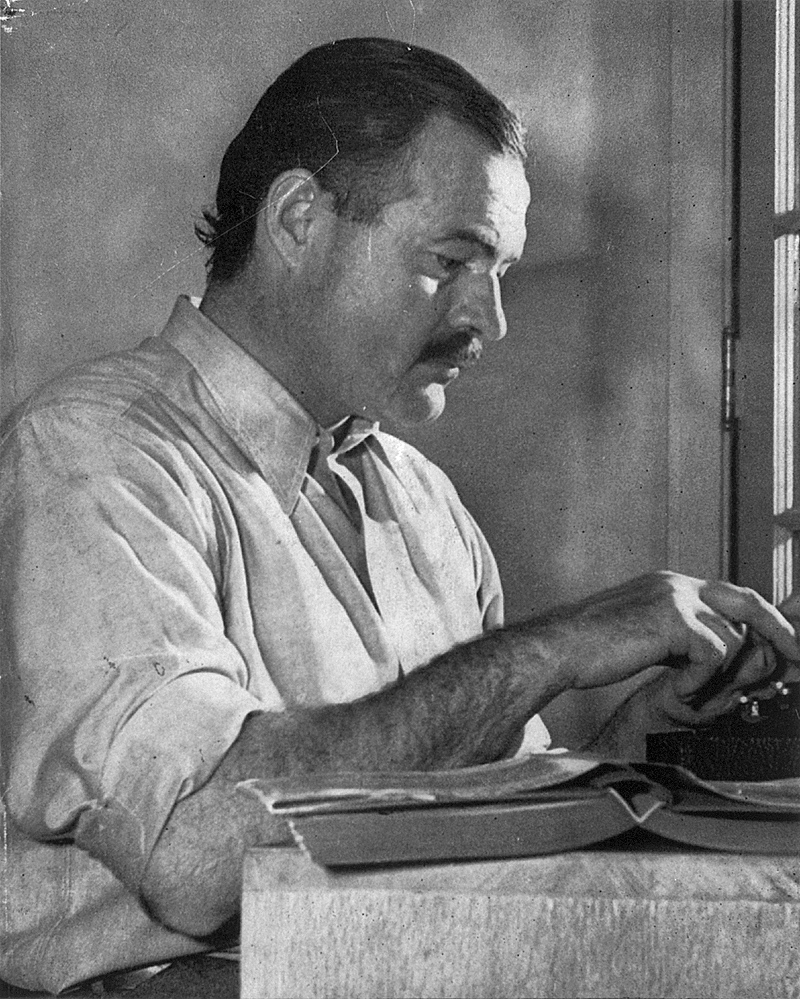
Here’s some more great advice from Hemingway – seven tips for writing fiction, as assembled by Open Culture.
Our favourite from the list is especially useful if you want maintain momentum on a project:
2. Always stop for the day while you still know what will happen next.
This is perfect for long projects. If you know what’s going to happen in the next scene, or the end of your current scene, you’ll return to the story ready to forge ahead.
If the first thing you do when you return to a piece is sit and plan, then you run the risk of a break in forward motion. Your productivity might suffer or even stall – and while there’s a time to think and plan, there’s only one way to finish a project: you have to write!
Foreshadowing
The narrative technique of ‘foreshadowing’ is used to prepare readers with the knowledge they’ll need to best enjoy plot and character developments in the latter parts of a story.
And so the urge for a writer is to give the reader everything they need, so they’re ready. On the other hand, we might want to hold back, keep the reader curious, keep them turning the page. And so which way to go? Foreshadowing can be a fine line between revealing too much too soon or too little too late.
We believe that the stories which handle foreshadowing best are the ones that give the reader enough information up front to build curiosity around questions of how and why as much as and sometimes more than, questions of who, what or whether.
So, for instance, a murder mystery will still work very well if the reader knows who the killer is early on in the story.
What the reader then wants to know most, is how the killer got away with the deed, not whether they will be caught but how they will be caught and why they did it in the first place.
Welcome to 2014 with some Advice from Chuck Palahniuk
Chuck Palahniuk, best known perhaps for Fight Club, has some fantastic advice for writers seeking to ‘show’ more in their fiction.
Have a look right here where he takes aim at eliminating ‘thought’ verbs and provides examples of showing vs telling:
Don’t tell your reader: “Lisa hated Tom.”
Instead, make your case like a lawyer in court, detail by detail. Present each piece of evidence. For example:
“During role call, in the breath after the teacher said Tom’s name, in that moment before he could answer, right then, Lisa would whisper-shout: ‘Butt Wipe,” just as Tom was saying, ‘Here’.”
 Close-Up Editing & Assessment